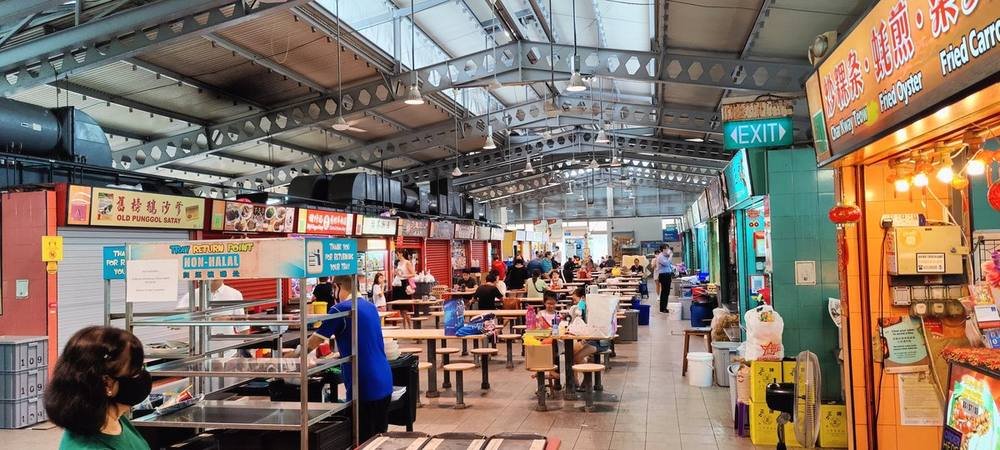
Having worked in global cities including Hong Kong, Beijing and Dubai, Andrew Lim expected to settle into life in Singapore with little fuss when he relocated in 2019. What he did not anticipate was how quickly he would be pulled into the rhythms of everyday Singapore, starting in his very first week, over lunch.
In his previous postings, Lim said, colleagues typically ate a salad or some fast food alone at their desks. In Singapore, his team headed out together, usually to a nearby hawker centre. He soon realised the shared meals were about far more than the food. "After a weekend, everyone would share their updates over lunch," said Lim, 34, the chief financial officer at homegrown influencer and content company Gushcloud. "I thought to myself, this social interaction is pretty cool, it's a unique Singapore culture."
Born in Korea, raised in Canada and educated in the United States, Lim had started his career in Hong Kong's finance sector before moving to Dubai and Beijing, cities where, he said, work relationships tended to stay within professional boundaries. Joining Gushcloud as the only expatriate in an office of 40 Singaporeans, he initially found it "mind-boggling" to hear colleagues talk openly about their weekends and their children's schooling. The more he listened, the more he saw a workplace built on warmth and genuine interest in one another.
That openness extended beyond the office. Colleagues welcomed him into their homes for festive gatherings such as Hari Raya and Chinese New Year, something he had rarely experienced elsewhere. "In Korea or Hong Kong, you do a lot less of this," he said. "Here, people invite you into their personal space and I think it's special."
Those early experiences reshaped how he saw the country, not only as a business hub but as a place where building a life felt achievable. That sense of belonging shaped one of his bigger decisions: encouraging his Korean wife to move to Singapore last year, with the couple planning to start a family. "Singapore is a stable, forward-looking place, and the strong focus on safety, rule of law and social cohesion makes me feel confident about building a long-term future here," he said.
Lim is one of the 1.91 million non-residents in Singapore, a figure that rose 2.7 per cent between June 2024 and June 2025. Increasingly, he said, he feels less like someone adapting to the country and more like someone growing alongside it, adding that he now has more local than foreign friends.
His international background has also shaped how he leads. Early on, he noticed that in meetings, once the most senior person offered a view, it often went unchallenged even when others might disagree. In response, he made a point of speaking last, giving his team room to share their opinions first. He also keeps brief notes on business contacts so he can follow up on personal details later, such as asking after a child sitting the Primary School Leaving Examination, small gestures he found build trust over time.
Outside work, Lim and his wife, Soyeon Kim, explore the city together, from the Singapore Botanic Gardens to cycling along East Coast Park. He jokes that she knows the MRT network better than he does. For his part, he has found his comfort zone in the hawker centre, where he now orders bak kut teh with the ease of a regular. "Recently, someone described me as a 'Korean-Canadian learning to become Singaporean'," he said, "and I felt that this captured my journey well."